review
Are Small Plates Actually Cheaper? The Real Cost Breakdown
Last Updated: July 20, 2026
When deciding where to eat out, the question of whether small plates dining actually saves money rarely gets a straight answer. Restaurants market small plates as sophisticated and shareable, often positioning them as premium offerings. But are small plates actually cheaper than traditional large-plate dining, or is it a clever pricing strategy that leaves your wallet lighter? This guide breaks down the real economics of small plates restaurants, the psychology behind plate size, and what you're genuinely paying for when you order small plates instead of a conventional entrée.
The short answer: it depends. Small plates can be cheaper per portion in some cases, but restaurants often use them to increase overall spending through portion manipulation and menu engineering. Below, we'll show you exactly how to evaluate whether small plates dining makes financial sense for your situation.
Are Small Plates Actually Cheaper? The Short Answer
The honest answer is that it depends entirely on how you order and where you eat. A single small plate typically costs less than a full entrée, but restaurants design small plates menus to encourage ordering multiple items. When you order three small plates instead of one large plate, your total bill rises significantly.
According to hospitality industry research, restaurants see 15-20% higher average check sizes when customers order small plates compared to traditional entrées. This isn't accidental, small plates represent deliberate menu engineering designed to increase per-customer spending. The real question isn't whether a single small plate costs less than a single entrée, but whether the total amount you spend on small plates represents better value than ordering one or two larger plates would.
The Economics of Small Plates Dining
Small plates have become dominant in contemporary restaurants, particularly in urban dining scenes. From a restaurant's perspective, small plates offer several economic advantages.
First, smaller portions mean lower food costs per plate. A restaurant serving 4-ounce portions instead of 8-ounce portions uses half the raw ingredients. But restaurants don't pass these savings to customers. Instead, they price small plates at 60-70% of what a full entrée would cost, pocketing the difference as improved profit margins.
Second, small plates encourage higher order volume. When diners feel they're ordering "small" portions, they order more confidently. A diner hesitant to spend on two full entrées feels comfortable ordering three small plates.
Third, small plates allow restaurants to showcase more dishes and create a sense of abundance. A menu with 20 small plates feels more expansive than one with 8 entrées, increasing perceived value.
According to National Restaurant Association industry analysis, restaurants using small plates formats report 25-30% higher gross profit margins than traditional formats. The math is clear: small plates are more profitable for restaurants.
Understanding the Small Plate Restaurant Trend
The small plates trend emerged in Spain with the tapas tradition, but its modern iteration in fine dining is different. Contemporary small plates restaurants use the format to create an experience of abundance while controlling portions and increasing profitability.
The difference between authentic small plates dining and pure portion manipulation lies in ingredient quality and preparation care. When a restaurant sources premium local products and invests in skilled preparation, small plates pricing makes more sense. When a restaurant simply serves smaller portions of standard ingredients at premium prices, you're being charged for the concept, not the substance. If you're looking for genuinely thoughtful small plates dining, Scottish Small Plates Restaurant Aberdeen exemplifies this approach, with menus crafted from local produce by experienced chefs who understand that quality justifies the format.
The trend accelerated because small plates work for restaurants during various economic conditions. During uncertainty, diners prefer ordering multiple smaller items rather than committing to one expensive entrée. Small plates also reduce waste compared to large plated dishes customers don't finish.
Portion Control Plates and the Delboeuf Illusion
The Delboeuf illusion is a visual perception phenomenon where the same portion of food appears smaller on a larger plate and larger on a smaller plate. This optical illusion affects not just how food looks, but how satisfied diners feel after eating.

When restaurants serve small portions on large, artfully plated dishes, the Delboeuf illusion makes the portion appear even smaller. Your brain registers the empty space and interprets it as less food, triggering a desire to order additional plates.
Research shows that diners served on larger plates eat approximately 20-25% more food than diners served identical portions on smaller plates. Restaurants deliberately use oversized plates for small portions to maximize visual contrast and encourage additional orders.
How Plate Size Affects Perception
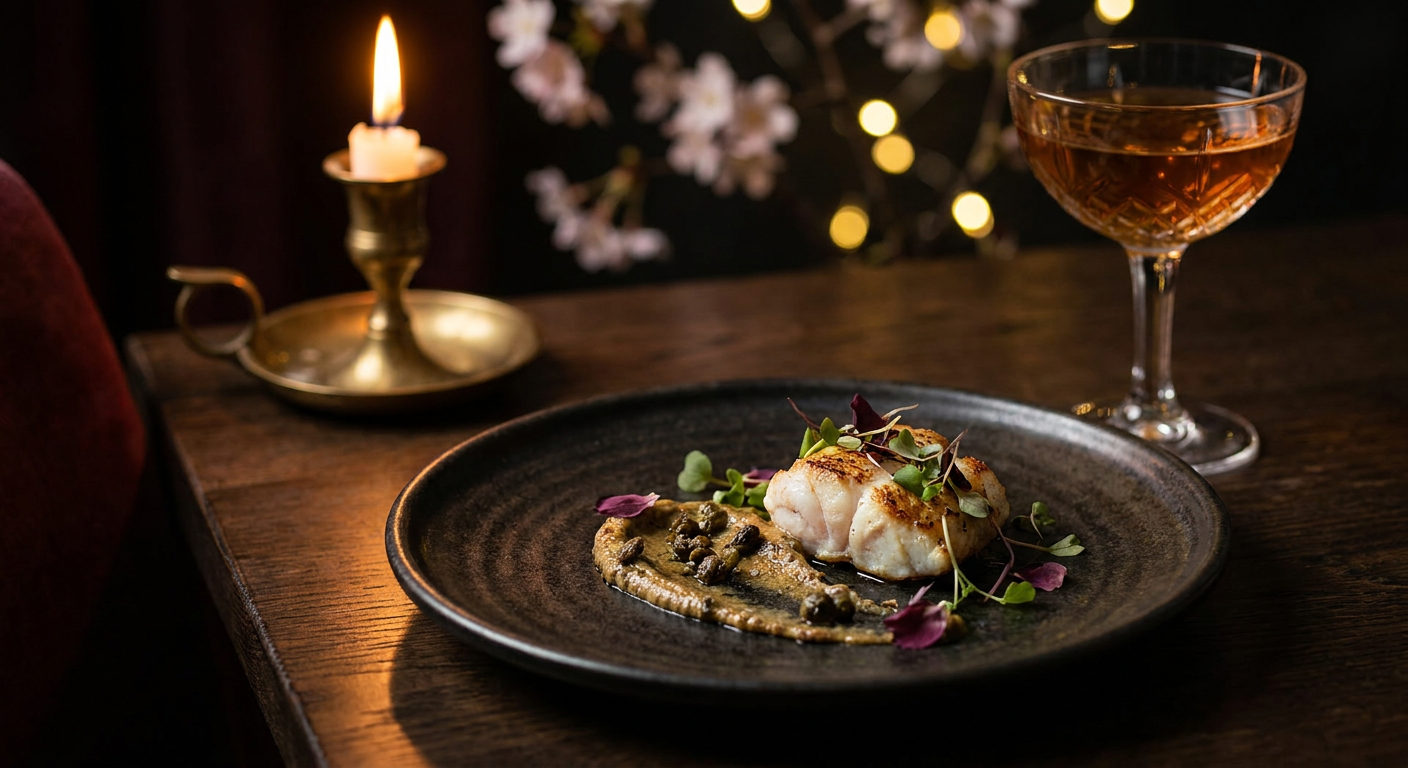
When you see empty space on a plate, your brain interprets it as an incomplete meal, triggering a desire to order more. Small plates restaurants exploit this by using oversized plates for small portions. A 4-ounce protein on a 12-inch plate creates maximum visual contrast, making your brain register the meal as insufficient.
This is deliberate menu engineering designed to increase check size. The same principle applies to restaurant glassware: a cocktail in a larger glass appears smaller than the same cocktail in a smaller glass.
Restaurant Pricing Strategies Behind Small Plates
Most restaurants price small plates at 60-75% of what a comparable full entrée would cost. This seems reasonable until you realize that small plates portions are often 40-50% of a full entrée portion.
Consider a hypothetical example: a full entrée of pan-seared fish costs £18 and weighs 8 ounces. The same restaurant offers a small plate version for £12 and weighs 4 ounces. The small plate diner pays £3 per ounce. The full entrée diner pays £2.25 per ounce. The small plate diner pays 33% more per unit of food.
This pricing structure assumes diners will order 2-3 small plates, bringing total spending to £24-£36 per person. According to Cornell Hotel and Restaurant Administration Quarterly research, restaurants using small plates menus see average check sizes increase by 35-45% compared to traditional formats, even when total food quantity consumed is similar.
Cost-Per-Ounce: What You're Actually Paying
The most revealing way to evaluate small plates pricing is to calculate cost-per-ounce. Divide the plate price by the portion weight in ounces. If a small plate costs £12 and weighs 4 ounces, your cost-per-ounce is £3. If a traditional entrée costs £18 and weighs 8 ounces, your cost-per-ounce is £2.25.
Most small plates restaurants price at £2.50-£4.00 per ounce. Traditional entrées typically cost £1.50-£2.50 per ounce. When evaluating whether small plates are cheaper for your situation, calculate the cost-per-ounce for each restaurant and multiply by the ounces you'd typically consume in a meal.
Small Plates vs. Large Plates: The Value Proposition
The value proposition of small plates depends on your priorities. If you value variety and discovery over portion size and cost efficiency, small plates may deliver genuine value. If you prioritize cost-effectiveness, traditional large plates usually win.
Genuine advantages of small plates include menu variety, the ability to try more dishes, and the social experience of sharing. Disadvantages include higher total spending, portion uncertainty, and psychological manipulation inherent in the format.
For diners focused on value, the comparison is straightforward. If you typically order one entrée at a traditional restaurant, you'll spend less there than ordering three small plates at a small plates restaurant. The key variable is how many plates you order.
Why Restaurants Profit More From Small Plates
Small plates represent superior economics for restaurants, which is why the trend has accelerated. Lower food costs are the primary driver, smaller portions use less raw ingredients, directly reducing cost of goods sold.
Higher check averages are the secondary driver. Restaurants serving small plates see average check sizes 35-45% higher than equivalent traditional restaurants.
Reduced waste is another benefit. Small plates portions are more likely to be fully consumed, improving food cost efficiency. Menu flexibility is also an advantage, small plates allow restaurants to rotate items based on ingredient availability and cost.
The financial reality is clear: restaurants make more profit from small plates formats than from traditional formats. Some of this profit is justified by genuine quality improvements. Much of it comes from charging premium prices for smaller portions.
So are small plates actually cheaper? The answer is no for most diners, unless you're disciplined about ordering quantity and focused on cost-per-ounce. Small plates restaurants are designed to increase your spending through portion manipulation and psychological pricing. If you enjoy the variety and discovery of small plates dining, that may justify the premium. But if you're primarily concerned with cost-effectiveness, traditional large-plate restaurants typically offer better value.
When you're ready to experience genuinely thoughtful small plates dining where quality ingredients and skilled preparation justify the format, visit Scottish Small Plates Restaurant Aberdeen in Aberdeen city centre, where Executive Chef Ryan Pirie and his team craft small plates from local produce. Discover what small plates done right tastes like.
Frequently Asked Questions
Are small plates actually cheaper than large plates at restaurants?
Not always. While individual small plates may cost less per dish, restaurants often price them to encourage ordering multiple plates. The total bill can exceed what you'd spend on a single large entrée. The key is understanding portion control and how many plates you actually need to feel satisfied. Cost-effectiveness depends on your appetite and how strategically you order.
How does the Delboeuf illusion affect what we think we're getting?
The Delboeuf illusion is a visual trick where the same portion appears larger on a smaller plate and smaller on a larger plate. Restaurants use this psychology with small plates dining, a modest portion looks more generous on a smaller plate, making you feel you're getting better value. Understanding this illusion helps you make smarter ordering decisions and assess whether you're truly getting your money's worth.
Why do restaurants use small plate restaurant trends if they're not cheaper?
Restaurants profit from small plates through higher margins and increased ordering. Smaller portions cost less to produce but command premium pricing when presented as curated experiences. The trend also reduces food waste and allows restaurants to showcase menu variety. For diners, the appeal is flexibility and the ability to taste multiple dishes, but this comes at a cost if you're not mindful of total consumption.
Do small plates help with portion control and eating less?
Small plates can support portion control at home by reducing visual distortion and encouraging mindful eating. However, in restaurants, the satiety factor works differently, smaller portions may leave you hungrier, leading to extra orders. The effectiveness depends on context. At home, smaller dinnerware can reduce overeating; dining out, you're more likely to order additional plates to feel satisfied.
What's the cost-per-ounce comparison between small and large plates?
Small plates typically have a higher cost-per-ounce than large plates because restaurants apply premium pricing to the dining experience, not just the food. A small plate might cost more per ounce than a traditional entrée, especially when you account for the labour, presentation, and ambiance. Calculating the true cost-per-ounce of your meal helps reveal whether small plates dining offers genuine value or inflated pricing.
Keep reading
Related Articles
Ready to visit?
Book Your Table
Experience Hammerman's for yourself. Scottish small plates, handcrafted cocktails, and live music every weekend.
Book a Table