how-to guide
How to Pair Whisky with Small Plates: A Guide

Last Updated: July 19, 2026
Understanding how to pair whisky with small plates transforms a casual meal into something memorable. Matching the right dram with the right bite creates harmony on the palate that neither can achieve alone. The principles are simpler than most people think. Below, we'll show you exactly how to approach whisky pairing with small plates, covering flavor profiles, matching strategies, and practical ideas you can use tonight.
How to Pair Whisky with Small Plates: The Fundamentals
The foundation of whisky pairing rests on understanding what's in your glass and what's on your plate. Whisky brings intensity, complexity, and heat; small plates bring their own flavor weight and texture. The trick is matching them so one doesn't overpower the other.
Think of pairing like a conversation. A strong, smoky whisky talking over delicate smoked salmon is just noise. But pair that same whisky with grilled lamb or aged cheddar, and they amplify each other. The intensity of the food should meet the intensity of the spirit somewhere in the middle.
Start with the small plate, especially if you're hosting, and select a whisky that complements what you're serving. This shifts the focus from "what whisky do I want" to "what experience do I want to create."
Understanding Whisky Flavor Profiles
Every whisky tells a story through its flavor profile. Scotch whiskies from Islay are famous for their peaty, smoky character, campfire, seaweed, iodine. Speyside whiskies tend toward fruity and floral notes: apple, pear, honey, heather. Highland whiskies often split the difference. Bourbon and rye bring vanilla, caramel, and spice from their charred oak casks.
The flavor profile determines what foods will harmonize. A delicate, floral whisky will disappear next to smoked salmon. A cask-strength whisky will overwhelm soft cheese. Knowing your whisky's dominant aromas, smoky, peaty, sweet, fruity, spicy, floral, is the first step in building a pairing.
Pay attention to the finish too. A long, sweet finish works beautifully with chocolate or dried fruit. A short, spicy finish pairs better with fatty foods like cured meat or nuts.
Matching Intensity and Balance
The golden rule: match the intensity of the whisky to the intensity of the food. A light, delicate whisky pairs with subtle flavors. A strong, full-bodied whisky can handle bold, rich dishes.
Fatty foods, cured meats, aged cheese, nuts, pair wonderfully with whisky because the alcohol and heat cut through the richness and cleanse the palate. This is why smoked salmon and whisky work so well together.
Acidity matters too. If your small plate has brightness, pickled elements, citrus, or vinegar, it can enhance a whisky's fruity or floral notes. Conversely, very sweet small plates can clash with sweet whiskies, creating cloying sweetness rather than harmony.
Whisky and Food Matching Principles
There are two main strategies when pairing whisky with small plates: complementary and contrasting.
Complementary Pairings
Complementary pairings echo flavors. If your whisky has vanilla and caramel notes, pair it with a small plate that shares those qualities, perhaps a chocolate truffle or toffee-flavored cured meat. The shared flavors create harmony and completion.
A fruity, apple-forward whisky with a dried apple and walnut small plate. A spicy rye with pepper-crusted beef carpaccio. The flavors seem to belong together because they speak the same language. This approach works especially well if you're new to whisky pairing.
Contrasting Pairings
Contrasting pairings play opposites. A smoky whisky with sweet, creamy cheese. A delicate, floral whisky with salty, umami-rich anchovy or miso-based small plates. The contrast creates intrigue on the palate.
A peaty whisky with a sweet, creamy blue cheese is contrasting but balanced. The smoke accentuates the sweetness, and the creaminess softens the smoke. This approach requires intuition but is where pairing becomes fun.
Best Small Plates for Different Whisky Types
Different whisky styles call for different small plates.
Smoky and Peaty Whiskies
Smoky and peaty whiskies are bold and demanding. They need equally bold small plates: grilled meats, lamb chops, beef carpaccio, smoked duck breast. The char and richness stand up to the smoke and intensity.
Smoked fish works brilliantly here. Smoked salmon, mackerel, or trout echo the whisky's smoky character while adding richness and salt. Cured meats, prosciutto, spicy chorizo, smoked sausage, are equally at home.
Aged, pungent cheeses pair wonderfully too. A sharp, aged cheddar or pungent blue cheese won't be overpowered by peaty intensity. The salt and funk in the cheese highlight the complexity in the whisky. Nuts and roasted vegetables round out the picture.
Sweet and Fruity Whiskies
Sweet and fruity whiskies have a lighter touch and pair beautifully with cheese, cured meats, and fruit-based small plates.
Soft cheeses, brie, camembert, fresh goat cheese, work wonderfully. The creaminess is enhanced by the whisky's sweetness, and the slight tang prevents the pairing from becoming cloying. Dried fruits and nuts are natural partners. A small plate of dried apricot, fig, raisin, and almond echoes the whisky's fruity or sweet notes.
Cured meats work here as well, especially those with a touch of sweetness or spice. Prosciutto, which has a delicate sweetness, pairs beautifully. So does spicy chorizo, where the heat contrasts with the whisky's sweetness.
Floral and Delicate Whiskies
Floral and delicate whiskies are the most subtle and pair best with equally delicate small plates.
Soft cheeses, especially fresh, mild ones, work well. A creamy fresh goat cheese lets the whisky's floral notes shine. Avoid pungent or aged cheeses that might drown out the whisky's subtlety.
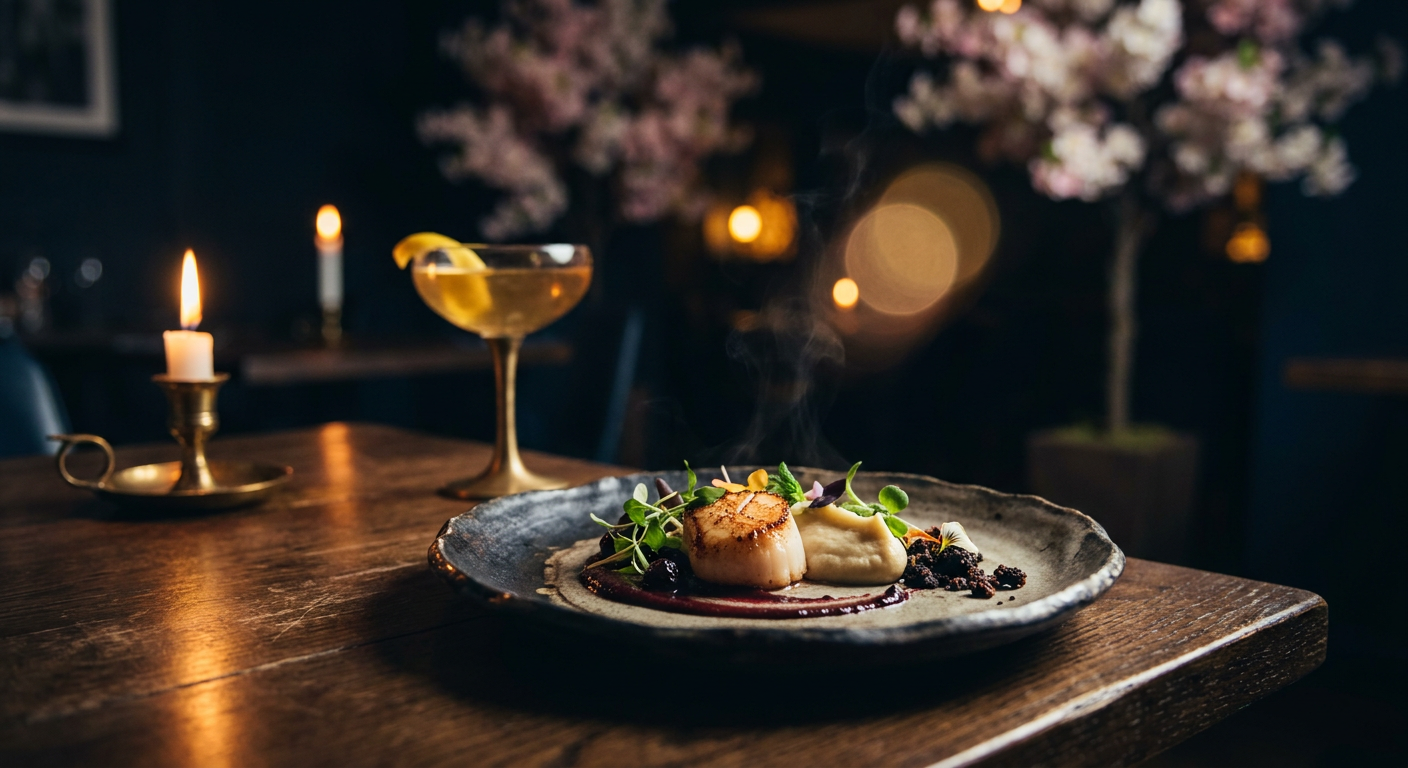
Seafood is perfect here. Delicate white fish, scallops, or oysters won't compete with the whisky. The briny, clean flavors enhance the whisky's floral and fruity notes. Small plates with fresh herbs, citrus, or light acidity work wonderfully.
Peaty Whisky Food Pairing: A Deep Dive
Peaty whiskies come primarily from Islay. The peat smoke comes from burning peat during the malting process, giving the whisky an earthy, smoky, sometimes medicinal character. Pair these with foods that have their own assertive flavors.
Grilled and charred foods are natural partners. A grilled lamb chop with herbs, charred radicchio or eggplant, or grilled beef all echo the whisky's smoky character while adding richness and texture.
Umami-rich small plates work beautifully too. Smoked fish, cured meats with deep, savory flavors, aged hard cheeses with nutty undertones, these all have the intensity to stand up to peaty whisky. A small plate of smoked mackerel with lemon and sharp aged cheddar is a pairing that works because all three elements have real presence.
Shellfish, especially smoked or prepared with bold flavors, can work. Smoked oysters, mussels with garlic and herbs, or ceviche with strong citrus and chili have enough intensity to balance the whisky's peat.
Avoid delicate, subtle flavors. A peaty whisky will obliterate a mild white fish or soft, creamy cheese.
Whisky Tasting Food Ideas: From Cheese to Chocolate
When setting up a whisky tasting with small plates, think in categories. This approach lets you build a progression that showcases different whiskies. If you're looking to experience this in a curated setting, the Scottish Small Plates Restaurant Aberdeen offers expertly crafted pairings that demonstrate these principles in action.

Cheese and Cured Meats
Start with cheese and cured meat because they're familiar and forgiving. A good cheddar, brie, and blue cheese give you a range of intensities. Add prosciutto, smoked sausage, and spicy chorizo, and you've got a foundation that works with almost any whisky.
The key is variety. Soft cheese, hard cheese, aged cheese. Mild cure, smoked cure, spiced cure. This range lets each whisky shine. Serve cheese at room temperature so flavors aren't muted. Cut cured meats into small, thin slices.
Seafood and Smoked Options
Seafood small plates pair beautifully with whisky, especially delicate and fruity expressions. Smoked salmon is the obvious choice, but also consider smoked mackerel, smoked trout, cured scallops, and smoked mussels.
The smoke in the seafood echoes peaty or smoky whiskies, while the clean, briny flavor complements fruity and floral expressions. Raw preparations work too. A delicate ceviche with citrus and chili, a carpaccio of white fish with herb oil, or a simple oyster on the shell all pair well with whisky.
Nuts, Dried Fruits, and Desserts
Nuts and dried fruits bridge the gap between savory and sweet. Toasted almonds, roasted hazelnuts, candied walnuts, dried apricot, fig, raisin, and date all work beautifully. A small plate of mixed nuts and dried fruit is simple but effective.
For dessert pairings, dark chocolate with high cocoa percentage pairs wonderfully with whisky, especially fuller-bodied, slightly sweet expressions. The bitter notes in the chocolate complement the whisky's warmth and complexity. Toffee, caramel, and fudge-based small plates work too, especially with bourbon.
Seasonal and Budget-Friendly Whisky Pairings
Pairing whisky with small plates doesn't require expensive ingredients or elaborate preparation.
In spring, pair fruity and floral whiskies with fresh goat cheese, spring vegetables like asparagus and peas, and fresh herbs. Summer calls for brightness and acidity, citrus, fresh berries, and light cured meats pair beautifully with fruity whiskies. Autumn brings roasted vegetables, nuts, and richer flavors that pair with fuller-bodied whiskies. Winter is the season for rich, warming pairings: hearty cured meats, aged cheeses, and dried fruits work beautifully with peaty or full-bodied whisky.
For budget-conscious pairings, skip expensive charcuterie and focus on quality basics. A good cheddar, simple cured meats from the deli counter, fresh fruit, nuts, and chocolate are affordable and work with almost any whisky. Success depends on balance and intention, not price tag.
Common Mistakes When Pairing Whisky with Small Plates
Most pairing mistakes come from overthinking or ignoring the basics.
The first mistake is pairing intensity wrong. A delicate whisky with an aggressively smoked or spiced small plate will result in the whisky disappearing. Match the weight and intensity of both elements.
The second mistake is assuming sweetness always works with sweetness. A very sweet whisky paired with a very sweet small plate becomes cloying. A touch of contrast, salt, acid, bitterness, prevents the pairing from becoming one-dimensional.
The third mistake is ignoring temperature and texture. Serve cheese at room temperature. Offer a mix of textures: creamy, crunchy, chewy. A palate cleanser between drams, water, a sip of apple, a cracker, keeps the experience fresh.
The fourth mistake is pairing too many elements at once. A small plate should have 2-3 components maximum. More than that, and flavors muddy rather than harmonize.
Hosting a Whisky and Small Plates Evening
Hosting a whisky and small plates evening doesn't require professional experience.
Start by selecting your whiskies first. Choose 3-5 expressions that represent different flavor profiles: perhaps a fruity Speyside, a peaty Islay, and a spicy bourbon. Then build your small plates around those whiskies.
Serve whiskies in order of intensity, lighter expressions first, then moving to fuller-bodied ones. This progression keeps the palate engaged and prevents lighter whiskies from being overshadowed.
Provide water and palate cleansers between drams. Keep portions small. The goal is to experience multiple whiskies and small plates, not to eat a full meal. Finally, keep the atmosphere relaxed. Whisky pairing doesn't require expertise or pretension. Encourage your guests to taste, experiment, and share what they find.
Pairing whisky with small plates is less about rules and more about balance and intention. Once you understand flavor profiles and intensity matching, you'll develop an instinct for what works. Whether you're hosting at home or dining out, the principles are the same: match intensity, create contrast where it works, and taste with curiosity. For those in Aberdeen looking to explore these pairings further, the [Cocktail Bar Aberdeen](https://hammermans.com/cocktail-bar-aberdeen) and Scottish Small Plates Restaurant Aberdeen offer expertly curated experiences that bring these principles to life.
Frequently Asked Questions
What foods pair well with different types of whisky?
Peaty and smoky whiskies pair beautifully with smoked salmon, grilled meats, and aged cheddar. Sweet and fruity whiskies complement chocolate, dried fruits, and lighter cheeses. Floral and delicate whiskies work well with seafood, nuts, and subtle spiced dishes. The key is matching the whisky's intensity and tasting notes to the small plate's richness and flavor profile.
How do you create a balanced whisky and food pairing?
Balance comes from matching intensity levels between the whisky and small plate. A robust, cask-strength dram needs equally bold flavours, think grilled meats or peppery dishes. A delicate single malt pairs better with lighter appetisers like smoked seafood or subtle cheese. Consider acidity, richness, and texture too. Fatty foods cleanse the palate, while acidic elements enhance aromatic whiskies.
What are some easy small plate ideas for a whisky tasting?
Start with versatile options: Scottish smoked salmon, aged cheddar cubes, candied nuts, dark chocolate squares, and grilled mushrooms. These work across multiple whisky types. For peaty whisky tasting food ideas, add smoked meats and roasted root vegetables. Dried fruits like apricots and figs bridge sweet and savoury whiskies. Avoid overly spicy or heavily salted items that overwhelm delicate drams.
Does the intensity of whisky affect food pairings?
Absolutely. High-intensity whiskies with smoky, peaty, or spicy notes need robust foods with matching depth and richness. Lighter, fruity whiskies pair with delicate, subtle flavours. Cask-strength expressions can handle charred or grilled preparations. Understanding your whisky's tasting notes, whether smoky, sweet, fruity, or floral, helps you select small plates that enhance rather than compete with the dram.
Keep reading
Related Articles
Ready to visit?
Book Your Table
Experience Hammerman's for yourself. Scottish small plates, handcrafted cocktails, and live music every weekend.
Book a Table