ultimate-guide
How to Plan Group Dinner: A Step-by-Step Guide

Last Updated: June 28, 2026
Planning a group dinner involves juggling dietary restrictions, conflicting schedules, and payment logistics. This guide walks you through every step, from invitation to final bill, so your group dinner happens without stress.
How to Plan Group Dinner: Start with the Fundamentals
Before booking a table or sending invitations, nail down three things: who's coming, when you're meeting, and where you'll eat. Identify your core group size, this determines your venue options. Pick a date that works for at least seventy percent of your intended guests. Send your initial invitation with three or four date options rather than a single fixed date.
Setting a Date, Time, and Guest List
Friday and Saturday evenings are prime dining slots but also the most expensive and hardest to book. Weeknight dinners often feel more relaxed. Smaller groups of eight have better conversation flow than larger groups of twenty-five. Be explicit about whether people can bring plus-ones.
Once you've settled on a date and confirmed your numbers, lock it in. A confirmed date with eighty percent of your intended group beats an uncertain date with potential for full attendance.
Choosing Your Venue and Capacity
Restaurant selection makes or breaks a group dinner. The venue needs to accommodate your party size, handle your group's noise level, and serve food that satisfies your dietary mix. For groups in Aberdeen city centre, [Scottish Small Plates Restaurant Aberdeen](https://hammermans.com/restaurant) offers private dining space that works beautifully without feeling isolated.
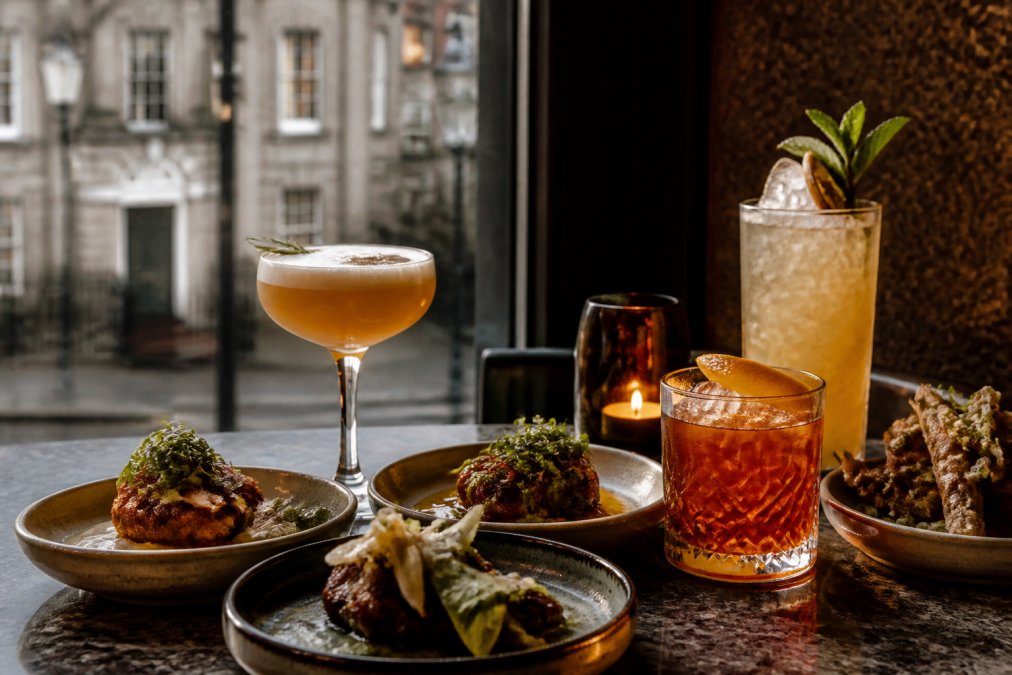
When evaluating venues, ask: Can they hold your party size? Do they require advance notice for groups? Can they handle dietary restrictions? Table service matters more with groups than individual dining. For groups of eight to twelve, a small plates format works particularly well, everyone orders from the same menu, which simplifies ordering and keeps costs predictable.
Group Dinner Reservation Tips for a Smooth Experience
Don't just call and say "table for twelve." Give the restaurant context. Explain it's a group dinner, mention any special occasion, and ask about their group dining process. Confirm exact party size, whether it might change, dietary restrictions, arrival time, and expected duration.
Get everything in writing. A confirmation email with date, time, party size, and special requests prevents misunderstandings. Communicate the reservation details to your group clearly, including the restaurant name, address, date, time, and parking information.
Call the day before your reservation to confirm. This catches last-minute issues and shows the restaurant you're organised.
How to Manage Dietary Restrictions for Group Events
When you send your initial invitation, ask about dietary needs: "Please let me know if you have any dietary restrictions or preferences." Once you've got the full picture, contact the restaurant with a summary: "We have two vegetarians, one gluten-free guest, and one person avoiding shellfish."
For severe allergies, call the restaurant directly and speak to a manager or chef. Ask how they handle cross-contamination in the kitchen. Most restaurants have strong protocols for allergies, but you want reassurance directly.
Include the dietary question in your initial invitation rather than waiting until a week before. Create a simple system for tracking responses, a shared document or email thread works fine. For groups with complex dietary needs, choose a restaurant known for flexibility. A small plates format means people aren't locked into a fixed menu.
Group Dinner Invitation Templates and RSVP Management
Your invitation should be warm, clear, and include all the information people need to decide whether they can attend:
Subject: Group Dinner - [Date] at [Restaurant Name]
Hi everyone,
I'm organising a group dinner and I'd love for you to join us.
When: [Day], [Date] at [Time] Where: [Restaurant Name], [Address] What: Small plates and cocktails
Please let me know by [RSVP date] if you can make it. If you have any dietary restrictions, let me know when you confirm.
Keep it short. Include the essential details: date, time, location, and RSVP deadline. Set your RSVP deadline for at least a week before the dinner. This gives you time to confirm final numbers with the restaurant and follow up with anyone who hasn't responded.
Create a simple tracking system, a spreadsheet with names, RSVP status, and dietary notes works perfectly. For people who don't respond by your deadline, send a gentle reminder. A few days before the dinner, send a final confirmation to everyone attending.
How to Split the Bill at a Group Dinner
Decide your approach before dinner, not after. Splitting evenly works when everyone's ordered at a similar price point. Paying for what you ordered is more precise but requires more work. Having one person cover it only works if everyone's genuinely comfortable with that arrangement.
Discuss the approach with your group before dinner. A simple message works: "We'll split the bill evenly, does that work for everyone?" When the bill arrives, have it sent to one person, ideally you as the organiser. Review it for accuracy, then divide it by the number of people. A fifteen to twenty percent tip is standard for good service.
If your group is comfortable with technology, bill-splitting apps like Splitwise or Venmo let people photograph their portion of the bill, and the app calculates who owes whom. Mention it in your pre-dinner message so people know to bring their phones.
Seating, Timing, and Event Flow
How you arrange people at the table shapes the entire experience. For groups under ten people, one table works fine. Sit people so conversation flows naturally. If there are couples, don't seat them next to each other. Sit them near people they might enjoy talking to.

For larger groups split across multiple tables, assign seating rather than letting people choose. Send the chart to everyone a day or two before dinner. When you create the chart, think about conversation potential. Seat people who don't know each other next to people who can facilitate introductions.
Arrive early if you're the organiser. Meet the server, confirm your party size, and ask about timing. With small plates, the timing usually works beautifully, plates arrive in waves, which keeps the meal flowing.
Planning for Accessibility and Inclusive Gatherings
A truly successful group dinner works for everyone. When you contact the restaurant, ask about accessibility. Can people with mobility issues access the restaurant? Is there accessible parking? Can the restaurant accommodate wheelchairs at the table?
Think about sensory needs too. Some people find loud restaurants overwhelming. If you're inviting someone neurodivergent or with sensory sensitivities, mention that when you book. Many restaurants can often arrange quieter seating or earlier arrival times when the space is less crowded.
For people with social anxiety, giving them information in advance helps. Send them the menu ahead of time so they can decide what they're ordering. Think about transportation too. If people are drinking, encourage them to arrange taxis or use ride-sharing.
Common Mistakes to Avoid When Planning Group Dinners
The most common mistake is leaving logistics to chance. Don't assume people know when or where you're meeting. Confirm everything. Don't show up with more people than you booked for.
Avoid trying to please everyone equally. Someone will have a conflict. Someone won't like the restaurant. Accept this and do your best. Don't wait until the last minute to confirm details. The week before your dinner, confirm with the restaurant and send a reminder to your group.
Finally, don't overthink the seating chart or the menu. Most group dinners succeed simply because people are happy to be there. Your job is to remove the logistical obstacles so that happiness can happen naturally.
| Element | Key Detail | Impact |
|---|---|---|
| Guest List | Confirmed 1-2 weeks in advance | Prevents last-minute scrambling |
| Venue | Booked with group context | Restaurant prepares properly |
| Dietary Info | Collected at invitation stage | Kitchen can accommodate needs |
| RSVP Deadline | Set for 1 week before | Time to confirm numbers |
| Bill Approach | Discussed before dinner | No awkwardness at the end |
| Seating | Assigned for groups over 10 | Encourages conversation |
| Confirmation | Sent 1-2 days before | Reduces no-shows |
Planning a group dinner doesn't have to feel like herding cats. The difference between a chaotic evening and a memorable one comes down to clarity, communication, and a restaurant that understands group dynamics. A small plates format and private dining options remove much of the complexity, everyone orders what they want, the kitchen handles dietary variations naturally, and the intimate space keeps conversation flowing. If you're in Aberdeen, Private Hire Aberdeen can help you reserve the perfect space for your group and let the restaurant team handle the service while you focus on enjoying the people around you.
Frequently Asked Questions
How far in advance should you plan a group dinner?
Plan at least two to three weeks ahead for a group dinner. This gives you time to confirm RSVPs, coordinate dietary restrictions, secure a reservation at your chosen venue, and handle any last-minute changes. For larger groups or special occasions, aim for four to six weeks. Early planning reduces stress and ensures the restaurant can accommodate your party size.
What's the best way to handle how to split the bill at a group dinner?
Decide on your payment method before the meal arrives. Options include splitting evenly, having each person pay for what they ordered, or assigning one person to handle the bill and collecting payments afterward. Digital payment apps like Splitwise or Venmo streamline the process. Always clarify the gratuity approach upfront to avoid awkward conversations at the end of the evening.
How do you manage dietary restrictions when planning a group dinner?
Collect dietary information from all guests at least one week before the event. Ask about allergies, intolerances, and preferences. Share this information with your restaurant when making the reservation or booking. Choose a venue that can accommodate multiple dietary needs or select a restaurant with diverse menu options. Confirm arrangements directly with the kitchen staff closer to the date.
What should group dinner invitation templates include?
Your invitation should include the date, time, venue name and address, dress code, RSVP deadline, and how guests should respond. Add a note asking about dietary restrictions and any accessibility needs. Provide a contact number or email for questions. Send invitations at least three weeks ahead, and send a reminder one week before the event. Digital invitations via email or event apps work well for tracking responses.
Keep reading
Related Articles
Ready to visit?
Book Your Table
Experience Hammerman's for yourself. Scottish small plates, handcrafted cocktails, and live music every weekend.
Book a Table