how-to
How Long Do Homemade Cocktail Syrups Last
Last Updated: August 10, 2026
Making your own syrups for cocktails transforms your home bar. You control the flavours, sweetness levels, and ingredients. But once you've invested the time, the practical question becomes unavoidable: how long will they actually keep?
The shelf life of homemade cocktail syrups depends on the type, storage conditions, and what you've added. A basic simple syrup stored correctly in the fridge can last months. An infused syrup with fresh fruit might be good for just a few weeks. Understanding these variables means you can make syrups with confidence, knowing exactly when to use them and when to start fresh.
At Hammerman's, where we craft signature cocktails from scratch, we take syrup storage seriously. This guide walks you through everything you need to know about keeping homemade cocktail syrups fresh, safe, and ready to use.
How Long Do Homemade Cocktail Syrups Last
Most homemade cocktail syrups last between three months and one year when stored properly. A basic simple syrup, equal parts sugar and water, typically keeps for six months in the refrigerator. Rich syrups, made with a higher sugar-to-water ratio, often last slightly longer because the extra sugar acts as a natural preservative.

Infused syrups tell a different story. Those made with fresh fruit, herbs, or spices have a shorter window because the added ingredients introduce moisture and organic matter that can spoil more quickly. Fruit-based syrups generally last four to six weeks in the fridge, while herb and spice infusions might stretch to eight weeks if kept cold and sealed properly.
The key variable isn't time alone, it's storage conditions. A syrup stored at room temperature will degrade faster than one kept refrigerated. A syrup in an airtight container will outlast one left partially open. Sugar concentration matters too. Higher sugar-to-water ratios create an environment less hospitable to bacterial growth, which is why rich syrups have the edge over simple ones.
Simple Syrup Shelf Life and Storage Basics
Simple syrup is the foundation of most home bars. Understanding why proper storage works means you can batch-make it with real confidence, not just habit.
The Science Behind Shelf Life: Sugar, Water, and Microbial Growth
Simple syrup survives longer than you might expect because of sugar concentration. When you dissolve sugar in water at a one-to-one ratio, you're creating an environment where the sugar content becomes hostile to most bacteria and mould. A properly made simple syrup typically sits at a water activity level around 0.80, which is why it's so stable compared to fresh fruit juice.
Acidity also plays a role. Pure simple syrup has a neutral pH around 5.5 to 6.5, which slows bacterial reproduction. This is why citrus-based syrups last slightly longer than neutral ones. Temperature is the variable that disrupts this balance. At room temperature, condensation can form inside the bottle, introducing water and raising the water activity. Refrigeration slows this process dramatically by keeping the syrup at a stable, cold temperature where microbial activity nearly stops.
Room Temperature Storage
Simple syrup can survive at room temperature for a few weeks, but this isn't ideal for long-term storage. If you're using your simple syrup regularly, room temperature storage is acceptable for short periods. The risk increases after two to three weeks. Any sign of cloudiness, off-smells, or visible particles means the syrup has started to degrade and should be discarded.
Refrigerated Storage
Refrigeration is where simple syrup thrives. Cold temperatures slow degradation dramatically by reducing microbial metabolism to nearly zero. A properly sealed bottle of simple syrup in the fridge will keep for six months or longer without issue.
The container matters. Glass bottles with airtight lids are ideal. They don't absorb flavours or odours, and they seal properly to prevent contamination and condensation buildup. Plastic bottles work but are less reliable. Metal lids are fine, though rubber seals can degrade over time. Check that your container seals completely before storing it by inverting it over a sink; if even a drop leaks, the seal isn't good enough.
Label your bottles with the date you made them. Store bottles in the coldest, most stable part of your fridge, typically the back of a shelf, away from the door where temperature fluctuates with each opening. Avoid storing syrup near the ice maker or in the door, where temperature swings can introduce condensation.
Rich Syrups vs. Simple Syrups: Which Lasts Longer
Rich syrup, made with a two-to-one ratio of sugar to water instead of one-to-one, behaves differently than simple syrup. The higher sugar concentration creates a more hostile environment for bacteria and mould. This means rich syrups typically last eight to nine months in the fridge, compared to six months for simple syrup.
The trade-off is viscosity and mouthfeel. Rich syrups are thicker and coat the palate more heavily. They work beautifully in certain cocktails, especially those with citrus or spice, but they're not suitable for every drink. A delicate gin sour might taste cloying with rich syrup, while a whiskey sour benefits from the extra body.
If you're making large batches and want them to last as long as possible, rich syrup is the way to go. The longer shelf life means less frequent batch-making.
Signs of Spoiled Simple Syrup to Watch For
Even with proper storage, syrup can spoil. Knowing what to look for means you'll catch problems before they end up in a drink.
Cloudiness is the most obvious warning sign. Fresh simple syrup should be crystal clear. If it develops a hazy appearance or visible particles, bacterial or mould growth has begun. This is your signal to discard it.
Mould growth appears as fuzzy spots, usually white or greenish, typically near the surface or around the lid. Any visible mould means the entire batch is compromised. Don't try to pour around it or strain it out.
Off-smells are another reliable indicator. Simple syrup should smell neutral or slightly sweet. If it smells fermented, vinegary, or unpleasant, something has gone wrong. Trust your nose.
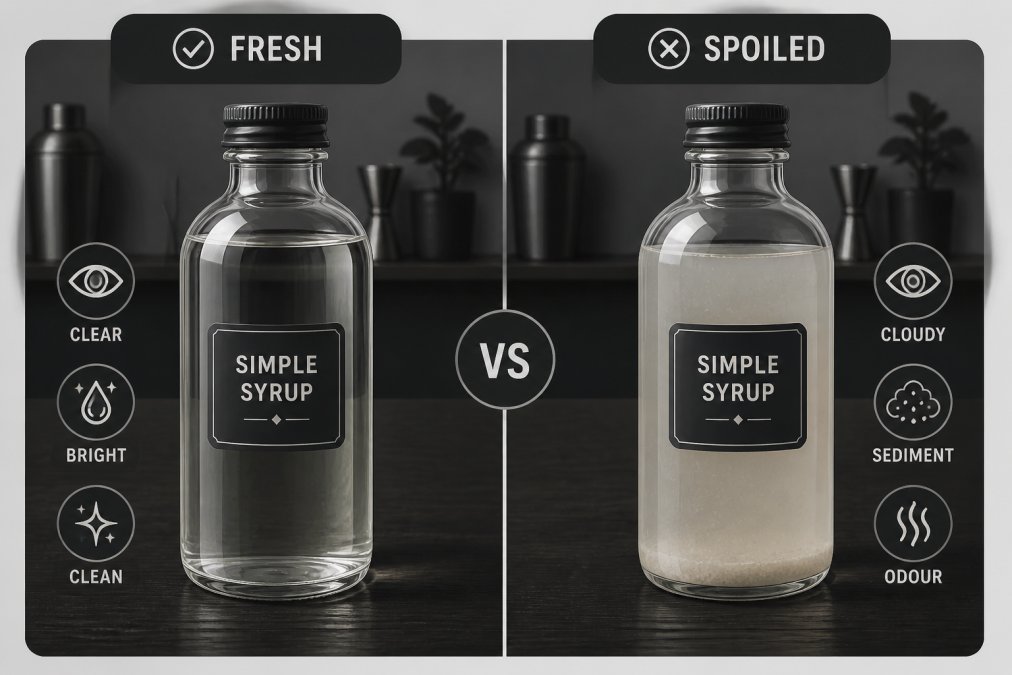
Temperature fluctuations can accelerate spoilage. If your fridge temperature dips below 4°C or climbs above 8°C regularly, syrup will degrade faster. Keep your fridge at a stable temperature. Similarly, if you've stored syrup in a cupboard exposed to direct sunlight or heat from appliances, degradation speeds up significantly.
Infused Syrups: Fruit, Herb and Spice Variations
Infused syrups are where home bartenders get creative. Passion fruit syrup, rosemary syrup, chilli syrup, these add complexity to cocktails that simple syrup alone can't match. But infusions come with a shorter shelf life because you're introducing additional organic material into a sugar solution.
Fruit-based syrups are the most time-sensitive. Fresh berries, citrus, and stone fruit all contain moisture and natural sugars that feed microbial growth. A fruit-infused syrup typically lasts four to six weeks in the fridge. Herb infusions, like basil, mint, or thyme, last longer because herbs have lower moisture content. You can expect eight to ten weeks from a well-made herb syrup. Spice infusions sit somewhere in between, usually lasting six to eight weeks.
The key to extending infused syrup life is straining thoroughly. Remove every particle of fruit, herb, or spice before bottling. Use a fine mesh strainer, then pass the syrup through cheesecloth if you want to be thorough. Store infused syrups in the coldest part of your fridge, away from the door where temperature fluctuates.
Extending Shelf Life With Preservation Techniques
If you want your syrups to last longer, preservation techniques can help. These methods are used by professional bars and are straightforward enough for home use.
Proper Bottle Sterilisation: Removing the Initial Microbial Load
Sterilisation removes bacteria and microorganisms before you even fill the bottle. The most reliable home method is hot-water sterilisation. Fill your bottles with water, place them in a large pot, cover with water completely, and bring to a rolling boil. Maintain the boil for ten minutes. Remove the bottles carefully using tongs and let them cool completely on a clean cloth. Once cool, fill immediately with hot syrup (still warm from cooking, ideally around 70°C). The heat will sterilise the inside of the bottle further.
Alternatively, wash bottles in very hot water with a small amount of white vinegar, which has mild antimicrobial properties. Rinse thoroughly with hot water and let them air-dry completely on a clean cloth in a dust-free area.
Airtight containers are non-negotiable after sterilisation. Glass bottles with screw-top lids sealed tightly are ideal. Test your lid by inverting the bottle over a sink; if even a drop leaks, the seal isn't good enough.
Vodka Fortification: A Preservative Approach
Adding a small amount of high-proof vodka to your syrup acts as a preservative by creating an alcohol environment where bacteria struggle to survive. A splash of vodka, roughly 10 to 15 percent of the syrup's volume, extends shelf life to nine months or longer, even for infused syrups.
The trade-off is flavour. Adding vodka changes the taste profile slightly. It's barely noticeable in syrups with strong flavours like spice or citrus, but it can affect delicate infusions. Use this technique selectively, for syrups you plan to keep long-term or for robust flavour profiles.
Freezing and Thawing Protocols
Freezing is another option, though it requires more planning than refrigeration. Syrup can be frozen in ice cube trays, then transferred to freezer bags once solid. Label the bags with the syrup type and date. This works well for specialty syrups you use infrequently.
Never thaw syrup at room temperature on the counter, as this creates condensation and temperature fluctuations that can introduce bacteria. Instead, move the frozen syrup to the fridge the night before you plan to use it, allowing it to thaw slowly at cold temperature. Once thawed, use the syrup within two weeks. Frozen syrup keeps for a year or longer, but you lose the convenience of having it ready to pour.
Conclusion
Homemade cocktail syrups are worth the effort. A basic simple syrup lasts six months in the fridge. Rich syrups stretch to nine months. Infused versions need using within weeks but deliver flavours no commercial product matches. The variables are storage temperature, container quality, and what you've added to the syrup. Keep them cold, keep them sealed, and check them occasionally for signs of spoilage.
Making your own syrups means you're controlling every element of your cocktails. When you're ready to craft drinks that reflect your taste and style, proper syrup storage keeps your bar running smoothly. For guidance on pairing your homemade syrups with expertly crafted cocktails, visit Hammerman's cocktail bar in Aberdeen's Golden Square.
Frequently Asked Questions
How long is homemade cocktail syrup good for?
Simple syrup lasts roughly one month at room temperature in an airtight container, and up to six months when refrigerated. Rich syrups (with higher sugar-to-water ratios) last longer due to increased preservation properties. Infused syrups with fruit or herbs typically last two to four weeks refrigerated. Adding vodka or other spirits can extend shelf life significantly by inhibiting bacterial growth and fermentation.
What are the signs of spoiled simple syrup?
Visible mold or cloudiness is the clearest indicator that your syrup has spoiled. You may also notice an off smell, fermentation bubbles, or a slimy texture when stirred. If the syrup tastes sour or has an unusual flavour, discard it immediately. Any of these signs suggest bacterial or mold growth has occurred, making the syrup unsafe to consume.
Can you freeze homemade cocktail syrups to extend shelf life?
Yes, freezing is an excellent preservation method. Homemade cocktail syrups can be frozen for up to a year in ice cube trays or freezer-safe containers. This works particularly well for infused syrups. Thaw at room temperature before use, and note that some texture changes may occur, though flavour typically remains intact. Freezing prevents bacterial growth and fermentation entirely.
Does adding vodka really extend cocktail syrup shelf life?
Adding vodka or other spirits does extend shelf life by acting as a natural preservative. The alcohol content inhibits bacterial and mold growth. A fortified syrup can last six months to a year refrigerated, compared to one to four months for unfortified versions. Use roughly 15-20% spirits by volume for effective preservation without overpowering the syrup's flavour profile.
Keep reading
Related Articles

Read how Hammerman's creates its drinks in our guide to scratch-made cocktails in Aberdeen.
Ready to visit?
Book Your Table
Experience Hammerman's for yourself. Scottish small plates, handcrafted cocktails, and live music every weekend.
Book a Table