how-to
How to Make Cranachan at Home: Scottish Recipe
Last Updated: August 9, 2026
What is Cranachan?
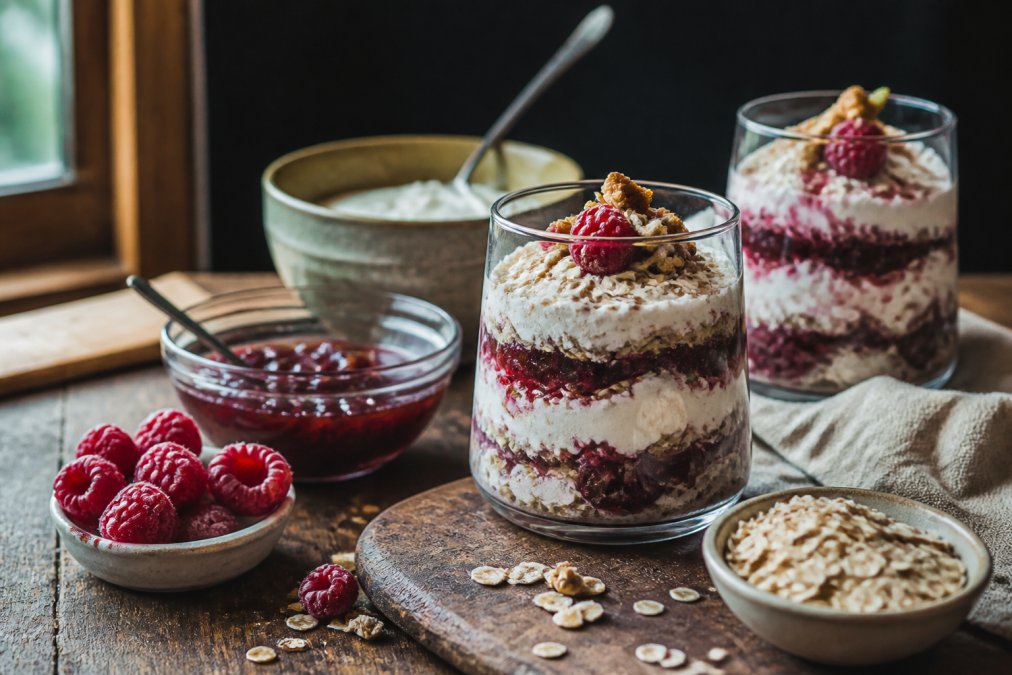
Cranachan is a traditional Scottish dessert that combines toasted oatmeal, whipped cream, fresh raspberries, and a splash of whisky into something genuinely special. The name itself comes from the Gaelic, though the exact etymology is debated among food historians. What matters is that this dessert represents centuries of Scottish culinary heritage compressed into a single spoon.
The beauty of cranachan lies in its simplicity and the contrast of textures. You've got the crunchy, nutty oats against soft, whipped cream. The tartness of raspberries cuts through the richness. And the whisky adds a warmth that ties everything together. It's not fussy or complicated, but it demands respect for its ingredients and a bit of care in execution.
This guide will walk you through making cranachan at home, step by step, with the kind of practical detail that actually makes a difference.
Ingredients You'll Need
For a proper cranachan, you don't need much, but what you do use should be good. Here's what you're working with:
For the base, gather 100g of pinhead oats (also called Scottish oatmeal or steel-cut oats), 300ml of double cream, 250g of fresh raspberries, 30ml of single malt whisky, and 2 tablespoons of heather honey. Some recipes call for caster sugar instead of honey, and that works fine, but honey adds a floral note that complements the raspberries beautifully.
You'll also want a pinch of vanilla extract if you have it, though it's optional. A small handful of toasted oats reserved for garnish at the end makes a difference too.
The whisky choice matters more than people realise. We'll get into that properly in a later section, but for now, know that you want something with character. A blended whisky will work, but a single malt with some age and complexity will elevate the whole thing. Avoid anything cheap or overly peaty unless that's genuinely your preference.
The raspberries should be fresh and in season if possible. Frozen ones work in winter, but fresh berries have a brightness that's hard to replicate. And the cream absolutely must be double cream. Single cream won't whip properly, and you need that whipped texture for cranachan to work.
Toasting Oats for Cranachan
The toasted oatmeal is what gives cranachan its signature texture and flavour. This step is where many home cooks go wrong, either burning the oats or not toasting them enough to develop that nutty, caramelised flavour.
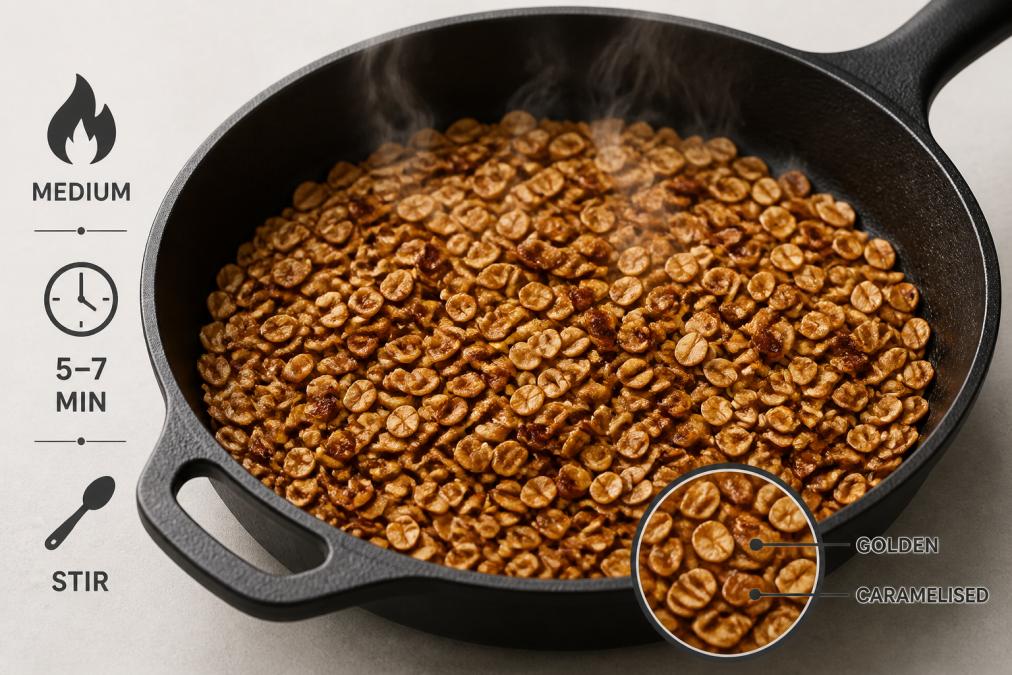
Spread your pinhead oats across a heavy-bottomed frying pan or baking sheet. If you're using a pan, keep the heat at medium. You're not trying to cook them quickly; you're trying to dry them out and bring out their natural oils and flavour. Stir constantly with a wooden spoon, and this is important: don't walk away. Oats go from perfectly toasted to burnt in about ninety seconds once they start smoking.
The whole process takes roughly five to eight minutes. You'll know they're done when the oats turn a deep golden colour and smell distinctly nutty and slightly sweet. That aroma is your signal that the starches have begun to caramelise. Some people add a tiny pinch of salt during toasting, which brings out the flavour even more.
Spread the toasted oats on a clean plate or baking tray to cool. If you leave them in the hot pan, they'll continue cooking and can quickly become bitter. Once cooled, you can use them immediately or store them in an airtight container for a few days. Fresh is always better, though.
A common mistake is using rolled oats instead of pinhead oats. Rolled oats will work, but they toast differently and won't give you the same satisfying crunch. Pinhead oats hold their texture better and develop a richer flavour when toasted.
How to Make Cranachan at Home
Now you're ready to assemble the dessert. This is where technique and understanding the order of operations actually matters.
Preparing the Raspberry Purée
Start with your raspberries. You'll use roughly half of them for a purée and reserve the other half for layering and garnish. Place the first batch in a bowl and gently crush them with the back of a fork. You're not making a smooth paste; you want a chunky purée with some texture still visible.
If you prefer a smoother consistency, push the crushed raspberries through a fine sieve. This removes the seeds and gives you a silkier purée, though you lose some of the rustic character. The choice depends on your preference and how refined you want the final dessert to feel.
Some recipes add a tablespoon of caster sugar to the purée to balance the tartness, particularly if your raspberries are very sharp. Taste as you go. You want the raspberries' natural tartness to cut through the cream, not disappear into sweetness.
Let the purée sit for a few minutes. The raspberries will release a bit more liquid, which is fine. That liquid adds flavour to every layer of the dessert.
Whipping the Cream
Pour your double cream into a clean bowl. This is crucial: the bowl and whisk must be cold. If they're warm, the cream will split or take forever to whip. Some cooks chill their bowl in the freezer for five minutes before starting.
Begin whisking by hand or with an electric mixer on medium speed. Watch the cream carefully. After about two minutes, it'll start to thicken. Continue whisking until it reaches soft peaks. This is the critical moment. Soft peaks mean the cream holds its shape loosely when you lift the whisk, but it's not stiff or grainy.
Stop here. Do not continue whisking. Over-whipped cream becomes grainy and eventually turns to butter. You want that cloud-like texture that sits somewhere between liquid and solid. It should still feel luxurious on the spoon.
Add the vanilla extract now if you're using it, and a tablespoon of heather honey. Fold these in gently with a spatula, keeping as much air in the cream as possible. The honey dissolves slightly into the cream, adding sweetness and subtle floral notes without needing to whisk further.
Assembling the Dessert
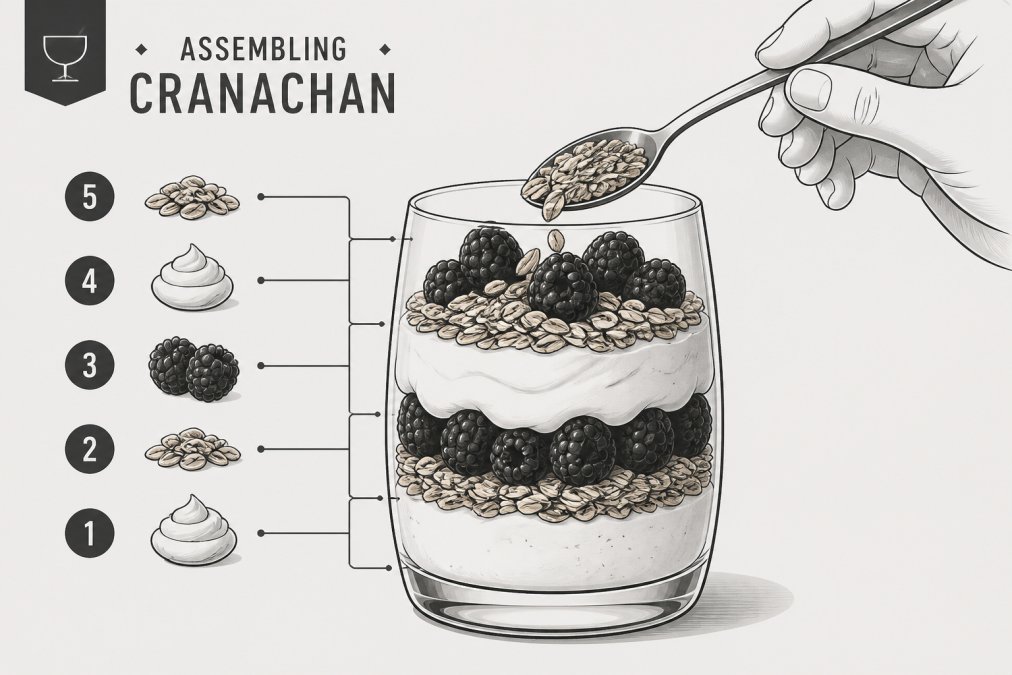
Use a tall dessert glass or a small bowl. The assembly follows a specific pattern that matters for both flavour and presentation.
Start with a layer of whipped cream at the bottom of the glass. This is roughly a quarter of your cream. Spoon it in gently and smooth it out slightly with the back of the spoon.
Next comes a generous handful of toasted oats. Don't be shy. The oats are what give cranachan its character. Sprinkle them evenly across the cream.
Then add a layer of the raspberry purée, drizzled across the oats. You're not trying to cover everything; let the purée pool slightly where it will.
Now repeat: another layer of whipped cream, another layer of oats, another layer of purée.
Top the whole thing with a final layer of cream and a few whole raspberries arranged on top. Finish with a small pinch of toasted oats for garnish and texture.
The layering isn't just for looks. It ensures that every spoonful contains all the elements in proper proportion. When someone eats cranachan, they should get cream, oats, and raspberries all at once, with the whisky note lingering underneath.
Best Whisky for Cranachan
The whisky is the final element, and it deserves consideration. A splash of single malt whisky adds warmth and complexity to cranachan, but the wrong choice can overwhelm the delicate balance of the dessert.
Avoid heavily peated whiskies unless you specifically want that smoky character to dominate. Islay whiskies, for instance, can overpower the raspberries and cream. Instead, look for something with a bit of age and smoothness. A Speyside whisky with notes of honey and orchard fruit complements cranachan beautifully. Highland whiskies with a touch of heather and spice work well too.
The whisky should be added just before serving, either drizzled directly into the glass or mixed into the cream layer before assembly. Some people add it to the purée instead. The key is that it should be present but not so dominant that it masks the other flavours.
A good whisky for cranachan typically costs more than a basic blended option, but you don't need an expensive single malt. A mid-range bottle with character will do the job. The Glenmorangie Original, Glenlivet 12-Year-Old, or Oban are all solid choices that won't break the bank and will enhance the dessert considerably.
Make-Ahead Storage and Serving
Cranachan is best served immediately after assembly, while the oats are still crunchy and the cream is at its fluffiest. However, real life doesn't always allow for that timing, so here's how to manage it.
You can prepare the components separately and assemble them within an hour of serving. Toast the oats in the morning and keep them in an airtight container. Make the purée up to four hours ahead and store it covered in the fridge. Whip the cream no more than two hours before serving and keep it cold.
The one thing you cannot do is assemble the whole dessert ahead of time. The oats will soften as they sit in the cream, and the whole thing becomes mushy rather than textured.
If you're making cranachan for a dinner party, prepare everything in advance and assemble individual glasses just before bringing them to the table. This takes five minutes and ensures everyone gets the best version.
For storage of leftovers, cranachan doesn't keep well once assembled. The oats absorb moisture and lose their crunch. If you have leftover components, store them separately in airtight containers in the fridge for up to two days.
Vegan and Dairy-Free Alternatives
Not everyone can eat dairy, and that's fine. Cranachan can be adapted without losing its essential character.
For a vegan version, replace the double cream with aquafaba (the liquid from a tin of chickpeas) whipped until it reaches soft peaks, or use a good-quality dairy-free cream alternative. Oat-based cream works particularly well here, which adds another layer of nuttiness to the dessert.
The raspberries and toasted oats remain unchanged. For the whisky, check the label to ensure it's vegan. Most single malts are, but some use non-vegan fining agents during production.
The honey can be replaced with agave nectar or maple syrup. Both work well, though they'll shift the flavour profile slightly. Agave is more neutral, while maple adds its own character.
The main challenge with vegan cranachan is getting the whipped texture right. Aquafaba whips beautifully, but it doesn't hold its peaks as long as cream. Assemble vegan cranachan closer to serving time and serve it cold.
Tips for Perfect Texture and Flavour
The difference between a good cranachan and a great one often comes down to small details that seem trivial until you taste the result.
Use cold ingredients. Everything should be chilled before you begin. Cold cream whips faster and holds its shape better. Cold glasses make a difference too, though that's a small luxury.
Don't oversweeten the dessert. The honey and the natural sweetness of the raspberries should be enough. If you add sugar to the cream as well, the whole thing becomes cloying and loses the tartness that makes cranachan interesting.
Toast the oats fresh if you can. Toasted oats start to go stale within a day or two, and staleness means loss of flavour. If you're making cranachan regularly, toasting oats becomes part of your routine.
Taste the raspberries before you use them. If they're particularly tart, add a touch of sugar to the purée. If they're already quite sweet, skip the extra sugar entirely. Raspberries vary considerably depending on the season and where they're grown.
The whisky should be a supporting note, not the main event. You should taste it, but only as warmth in the background. If the whisky is the first thing you notice, you've added too much or chosen something too assertive.
Serve cranachan in a proper glass. A tall, narrow glass shows off the layers beautifully and makes the dessert feel intentional rather than thrown together. The visual presentation matters more than people think.
Cranachan is a dessert that rewards attention to detail. It's not complicated, but it does demand that you understand what each ingredient contributes and why the order of assembly matters. Once you've made it a few times, it becomes second nature, and you'll find yourself making it regularly for friends and family.
If you're in Aberdeen and want to taste cranachan made by people who understand Scottish food properly, visit Hammerman's on Golden Square. We serve it as it should be served, with quality ingredients and the kind of care that comes from genuinely knowing what you're doing. Book a table at hammermans.com and experience the real thing.
Frequently Asked Questions
Can I use porridge oats in cranachan?
Porridge oats work in a pinch, but pinhead oats are traditional and deliver the best texture. Pinhead oats are coarser and hold their crunch longer when toasted, creating that signature crunchy layer in your cranachan. Porridge oats soften more quickly and can become mushy if the dessert sits for even a few hours. If you only have porridge oats, toast them briefly to avoid over-softening.
How far ahead can you make cranachan?
Assemble cranachan no more than 2-3 hours before serving. The toasted oats will gradually soften as they absorb moisture from the cream and raspberry purée. You can prepare the components separately: toast the oats and store in an airtight container for up to 3 days, make the purée the day before, and whip the cream 1-2 hours ahead. Assemble just before serving for the best crunchy texture.
Is it better to toast the oats for cranachan?
Yes, toasting oats is essential. The heat brings out a deep, nutty flavour and creates a crunchy texture that defines cranachan. Raw oats are bland and soft by comparison. Toasting takes only 5-10 minutes and transforms the entire dish. You'll notice the difference immediately when you taste the caramelized, toasty notes that make this Scottish dessert special.
What whisky should I use in cranachan?
A single malt Scotch whisky is traditional and best. Look for a Highland or Speyside whisky with warm, fruity notes that complement the raspberries. Avoid heavily peated whiskies unless you enjoy smoky flavours. Start with 1-2 tablespoons per serving and taste as you go. If you prefer a milder whisky flavour, use less or substitute with golden syrup for sweetness without the alcohol.
Keep reading
Related Articles



Ready to visit?
Book Your Table
Experience Hammerman's for yourself. Scottish small plates, handcrafted cocktails, and live music every weekend.
Book a Table